RVs and motorhomes place different demands on suspension systems than ordinary passenger vehicles. Their weight, long wheelbases, tall bodies, storage compartments, water tanks, appliances, and changing cargo loads all affect how they handle bumps, turns, braking, and highway travel.
For owners in Surprise, Arizona, suspension concerns may become more noticeable during long trips or when the vehicle carries passengers and supplies. Proper suspension system repair requires equipment that can safely support the vehicle and give technicians access to components under realistic load conditions.
Why Are RV Suspension Systems Different?
A motorhome may be built on a commercial truck, van, or custom chassis. Its suspension can include heavy-duty springs, shocks, sway bars, bushings, steering linkages, air-assisted parts, and load-leveling equipment. These components manage far more weight than those on a typical car.
The body also sits higher, raising the center of gravity. Looseness or uneven support can affect body roll, steering response, and stability. Because the suspension, steering, tires, brakes, and load distribution influence one another, a complete suspension service should consider the vehicle as a connected system.
Why Does Vehicle Weight Change the Inspection?
An RV’s weight affects how its suspension rests and moves. Parts that look acceptable when the vehicle is lightly loaded may behave differently when fuel, water, luggage, passengers, and equipment are added.
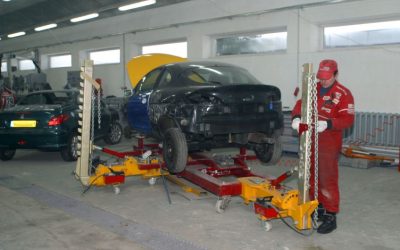
The inspection area must support the vehicle’s full dimensions and weight. Heavy-duty lifts, rated jacks, stands, alignment systems, and wheel-service equipment may be necessary. Equipment intended for passenger cars may not provide enough capacity, access, or stability.
Technicians also need room to inspect long chassis sections, multiple axles, steering parts, and suspension mounting points. The correct equipment supports both safety and accurate diagnosis.
What Symptoms May Point to Suspension Problems?
Common RV suspension symptoms include excessive swaying, repeated bouncing, uneven ride height, steering wander, clunking, vibration, or a harsh response over rough pavement. A motorhome may also lean during turns or feel unsettled when a large truck passes.
Uneven tire wear can provide another clue, although it may also involve inflation, loading, alignment, or steering concerns. A car suspension service should not assume that one symptom identifies one failed part.
Drivers can help by noting whether the concern appears when the RV is loaded, during crosswinds, while braking, or only at highway speeds. These details can make inspection more focused.
How Does Load Distribution Affect Handling?
RVs carry changing loads. Water, fuel, luggage, tools, food, bicycles, and camping equipment may be stored in different areas. Weight added too far forward, rearward, or to one side can alter ride height and handling.
Suspension repairs cannot always correct a condition caused mainly by poor load distribution or operation above the vehicle’s limits. Accurate axle weights and information about how the RV is normally packed may be necessary.
A motorhome that sits level while empty may lean after its storage compartments are filled. Evaluating the vehicle in its normal travel condition can produce more useful findings than inspecting it completely unloaded.
Which Components Require Attention?
Shocks and bushings are common inspection points, but many other parts affect ride quality. Springs, sway-bar links, control arms, ball joints, steering components, wheel bearings, air springs, mounts, and fasteners may also need evaluation.
Leaks around shocks or air-assisted parts can indicate deterioration. Cracked bushings may allow unwanted movement, while loose hardware can create noise and affect handling. Rust, impact damage, and earlier modifications may complicate the condition.
Suspension maintenance should examine how the parts work together instead of replacing one component only because it is near a reported sound.
Why Do Alignment and Ride Height Matter?
Alignment can change when suspension parts wear, ride height shifts, or loading becomes uneven. Incorrect alignment may contribute to steering pull, wandering, and irregular tire wear.
Ride-height measurements can show whether one corner or axle is supporting the vehicle differently. Necessary suspension repairs should generally be completed before final alignment because worn parts can prevent measurements from remaining consistent.
Heavy-duty alignment equipment must accommodate the RV’s wheelbase, axle configuration, weight, and body size. This is another reason a suitable suspension repair shop matters.
What Should Owners Share Before Service?
Owners should provide the RV’s chassis type, mileage, typical load, recent trips, modifications, towing setup, and previous repair history. They should also mention whether tanks are usually full or empty when the concern occurs.
Photographs of an uneven stance or notes about handling may help when the symptom is intermittent. Maintenance records can show whether shocks, bushings, steering parts, or alignment work were completed earlier.
Champs Family Automotive provides information for Surprise-area owners seeking Suspension system repair, and their service information covers steering and suspension concerns for larger vehicles.
Heavy-Duty Vehicles Need the Right Repair Approach
RV and motorhome suspension work involves more than installing stronger parts. Accurate diagnosis depends on chassis design, vehicle weight, load distribution, ride height, steering behavior, and the interaction between multiple components.
For Surprise owners, properly rated equipment supports safer lifting, better access, and more reliable measurements. A thorough inspection can determine whether the concern comes from worn parts, loading, alignment, modifications, or several factors working together.